Between April 2024 and March 2025, vehicles hit railway bridges in Britain 1,666 times, one every five hours, according to Network Rail. The strikes cost around £12 million in delays and cancellations and held up trains for more than 120 days in total. The most-hit bridge, on Watling Street (A5) in Hinckley, was struck 22 times; Harlaxton Road in Grantham 18 times; Stuntney Road in Ely 15 times.
It is not only a British problem. New York State reported 310 bridge strikes in 2025, and Queensland Rail recorded 369 rail bridge strikes in 2023/24, more than one a day.
What the investigations say causes them
The official explanations are remarkably consistent across countries and years:
- Drivers not knowing their vehicle's height. In Network Rail's own survey, 32% of drivers admitted setting off without knowing their vehicle's height, and 56% did not consider low bridges when planning their journey.
- Car sat navs. The UK Traffic Commissioners blame "poor route planning and the reliance on inappropriate satnav systems" and urge drivers to use a commercial vehicle sat nav, "not one designed for a car". New York's governor says consumer GPS and phone maps "do not necessarily take low-clearance bridges and overpasses into account".
- Diversions. Transport Scotland's guidance warns: "If you have been diverted from your original route be bridge height aware… Your new route could be lower." Network Rail's guidance to operators asks, "Was the driver taken off route?"
- Shortcuts. The Traffic Commissioners single out "taking unsuitable shortcuts back to the depot or when going for maintenance".
The pattern: the drive nobody planned
Read those causes together and a pattern appears. A route planned in advance for the right vehicle, with the right height entered, avoids the bridge. The strikes cluster around the moments that planning does not cover: the diversion, the shortcut back to the depot, the van driver who has never driven anything tall, the trip so short nobody typed in a destination.
No official figure measures exactly how many strikes happen off a planned route, and we will not invent one. But every investigation above points at route planning, the wrong sat nav, or leaving the planned route, rather than at drivers ignoring a bridge they knew about.
What helps
- Know your height, and write it in the cab. Measured loaded, at the highest point, in both feet and metres.
- Use a sat nav built for your vehicle, with your real height, width and weight in the profile. A car sat nav cannot avoid a bridge it does not know you hit.
- Treat diversions as unplanned routes. Re-route with the vehicle profile, and watch the signs.
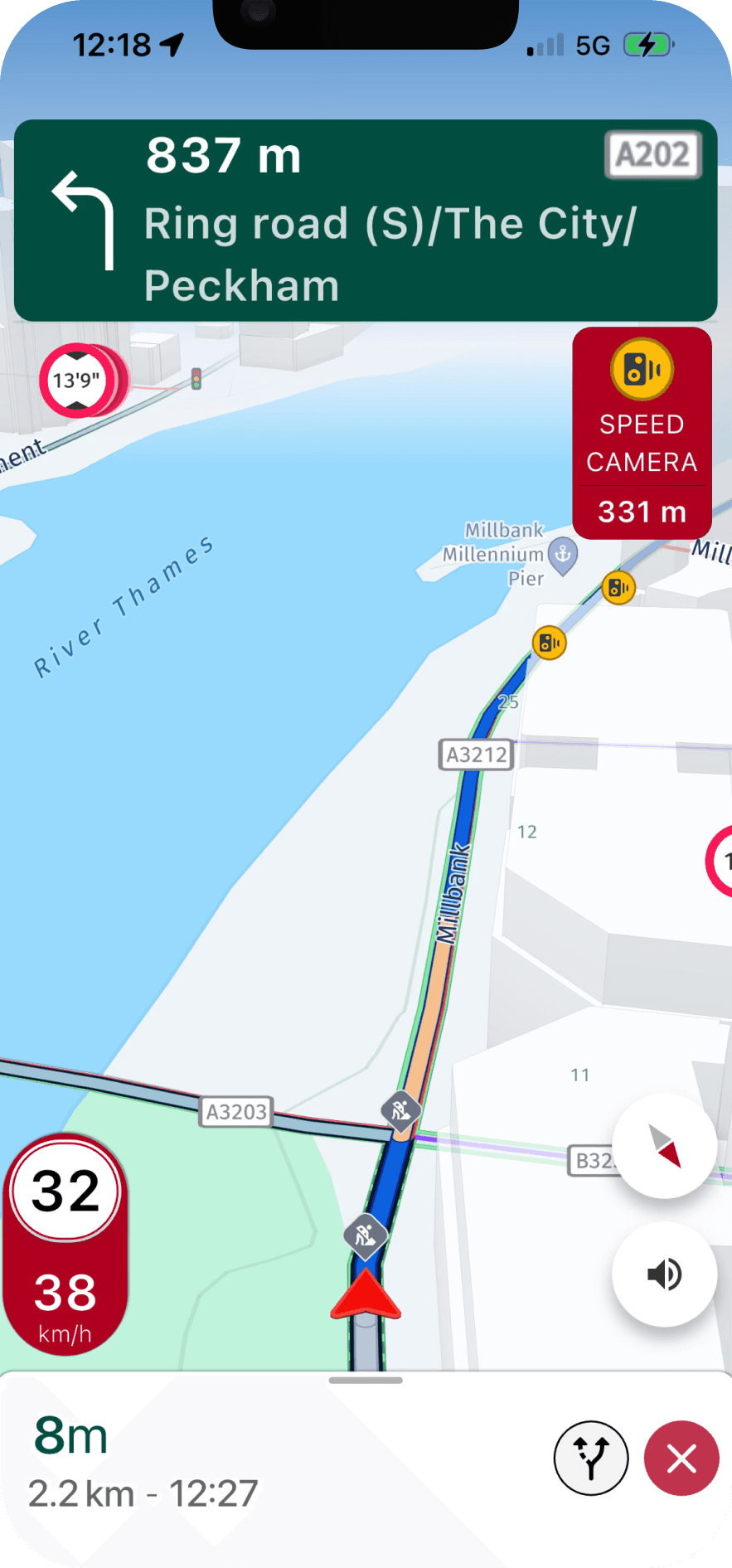
- Cover the drives without a route. This is where a phone can do more than a paper plan: NaviTruck's background protection notices when you start driving, even with the app closed, and warns on the lock screen before a low bridge your vehicle does not fit, with no destination set.
Comparing truck sat navs? See our sourced guides for the UK, the US and other countries.